

 English
 Español
 Français

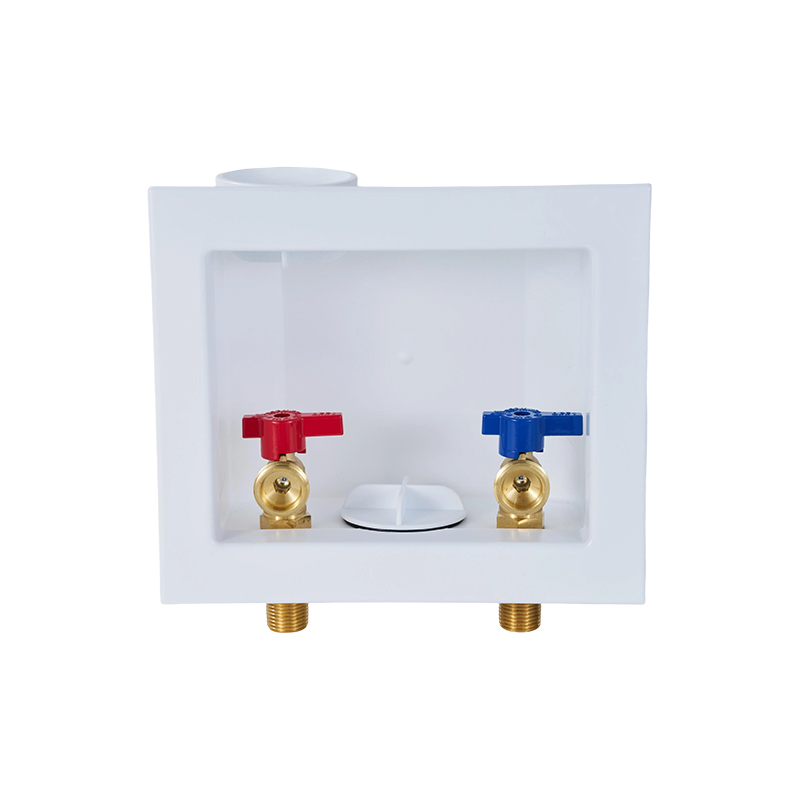
A washing machine outlet box may look like a relatively simple plumbing component, yet its construction becomes considerably more important inside a fire-resistance-rated wall. A standard box provides a connection point for hot and cold water lines and the drain. A fire rated washing machine outlet box has an additional responsibility: its design must work as part of a tested wall assembly without compromising the required fire-resistance performance.
That difference affects the box material, mounting method, surrounding wall construction, penetration treatment, and product certification. Fire-rated models are commonly developed for multi-family housing, commercial buildings, and other projects where laundry plumbing passes through rated partitions. Public product specifications show configurations tested for both 1-hour and 2-hour wall assemblies.
Fire Rating Starts With the Wall Assembly
The fire rating of an outlet box should not be considered as an isolated number printed on the product. Its performance depends on the wall construction and installation method covered by the applicable listing.
- 1-hour assemblies: Some tested configurations use one layer of 5/8-inch Type X gypsum on each side of the wall.
- 2-hour assemblies: Certain tested designs use two layers of 5/8-inch Type X gypsum on each face.
- Framing: Published fire-rated box specifications can cover nominal 2 x 4 wood studs or minimum 26-gauge steel studs at defined spacing.
- Installation position: The tested listing may establish limitations involving stud spacing, box location, cavity arrangement, and clearance from framing members.
This means a fire-rated box cannot simply be installed in any wall and automatically retain its advertised rating. The wall type and installation details need to correspond with the tested configuration.
Special Materials Protect the Wall Penetration
Material construction represents another major difference. Fire-rated outlet boxes can incorporate fire-resistant compounds together with intumescent materials or insulation designed to respond to elevated temperatures.
Some commercial fire-rated washing machine boxes use Bulk Molding Compound (BMC) as the box material and incorporate intumescent pads or UL-classified insulation. Intumescent materials can expand under high heat, helping address the opening created around plumbing components during a fire event.
This construction differs from treating the box as nothing more than a plastic housing. The fire-resistance system has to account for the box itself as well as the surrounding penetration.
The Drain Opening Deserves Attention
The drain connection creates another penetration through the box and wall system. Fire-rated models can use a metal sleeve around the drain section together with an intumescent component. Published specifications also define requirements for filling gaps between the box and gypsum material.
- Drain size: 2-inch drain openings are commonly specified for PVC or ABS DWV connections.
- Gap treatment: Small gaps may require compatible joint compound, while larger openings can require firestop sealant according to the tested installation.
- Pipe material: Product configurations can support PEX, copper, or CPVC supply connections depending on the specific model.
Fire Testing Goes Beyond a Simple “Fireproof” Label
Technical listings provide more useful information than a general claim that a product is fire resistant. ASTM E814 and CAN/ULC-S115 are used for firestop system evaluation, with ratings expressed through classifications such as F and T ratings. Published washing machine outlet box specifications show configurations achieving 60-minute and 120-minute F ratings under ASTM E814, depending on the wall assembly.
The T rating is also relevant because it addresses temperature transmission through the penetration. The published data can show different T-rating durations depending on the pipe material and wall configuration. Copper, PEX, and CPVC therefore should not automatically be assumed to behave identically under the same fire exposure.
Pipe Compatibility Still Matters
Fire protection does not eliminate normal plumbing connection requirements. A fire rated washing machine outlet box still needs a supply connection compatible with the project's piping system.
- PEX connections: Models can be configured around crimp, expansion, or other specified PEX joining systems.
- Copper connections: Sweat, press, or other listed connection options may be available.
- CPVC connections: Glue or push-to-connect configurations can appear within product ranges.
- Washer connection: 3/4-inch male hose-thread outlets are commonly used for washing machine supply hoses.
Matching the supply connection to the piping material is therefore still part of product specification, even though fire performance becomes a major additional consideration.
Could Water Hammer Protection Be Built In?
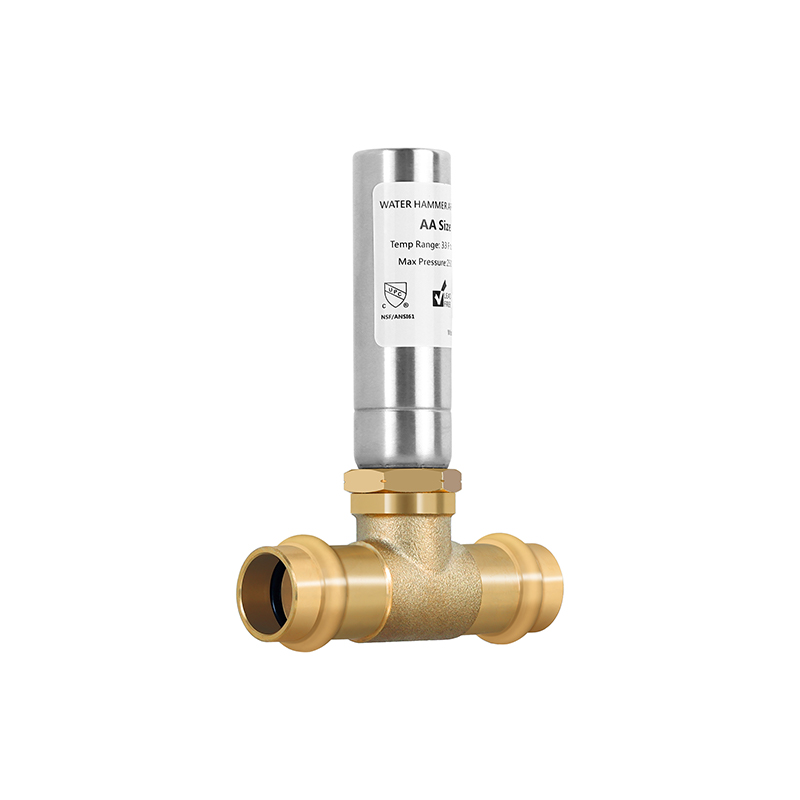
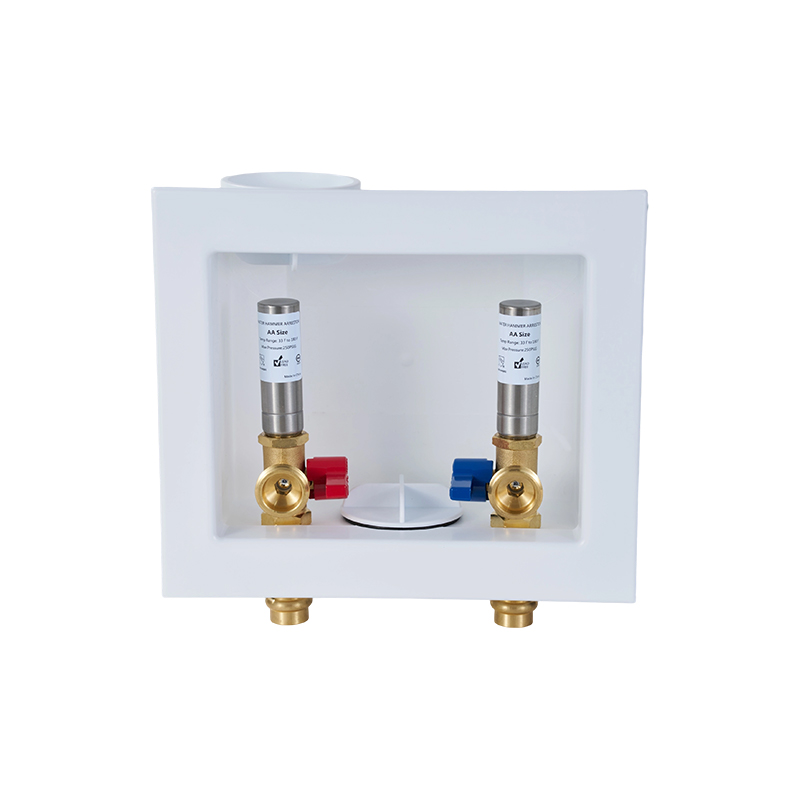
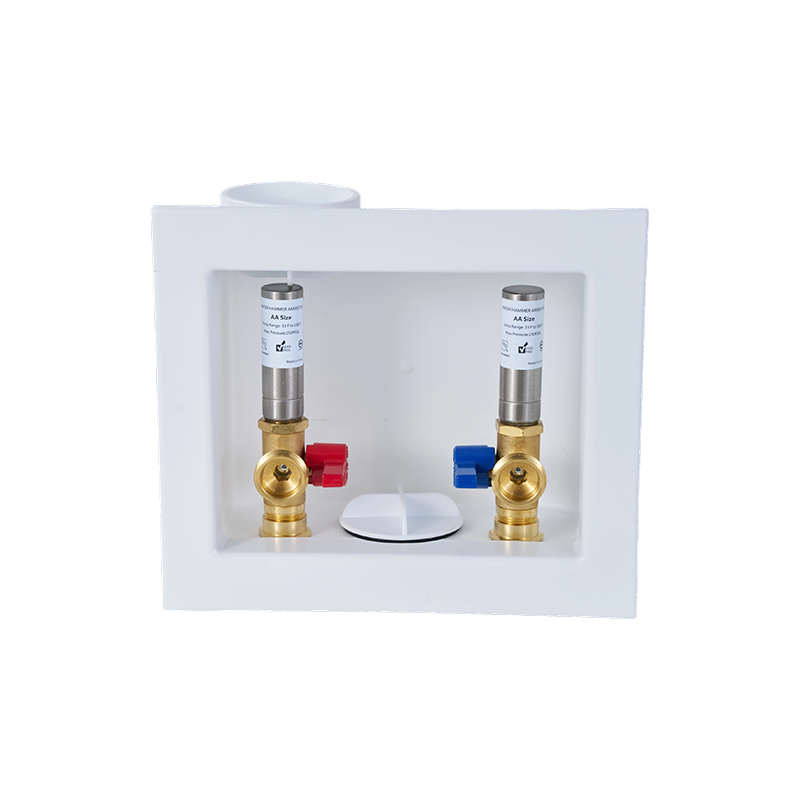
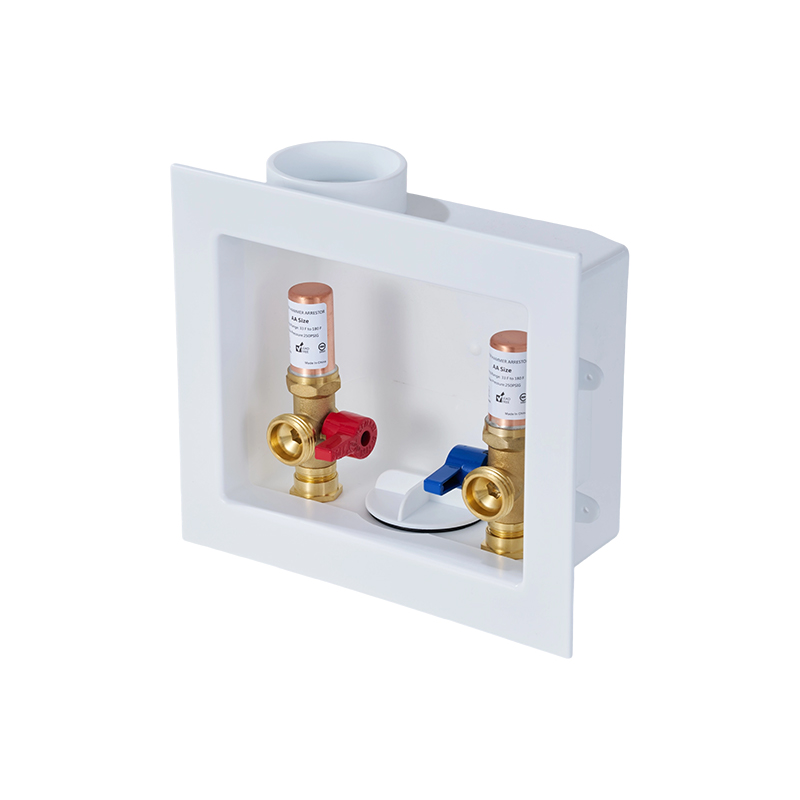
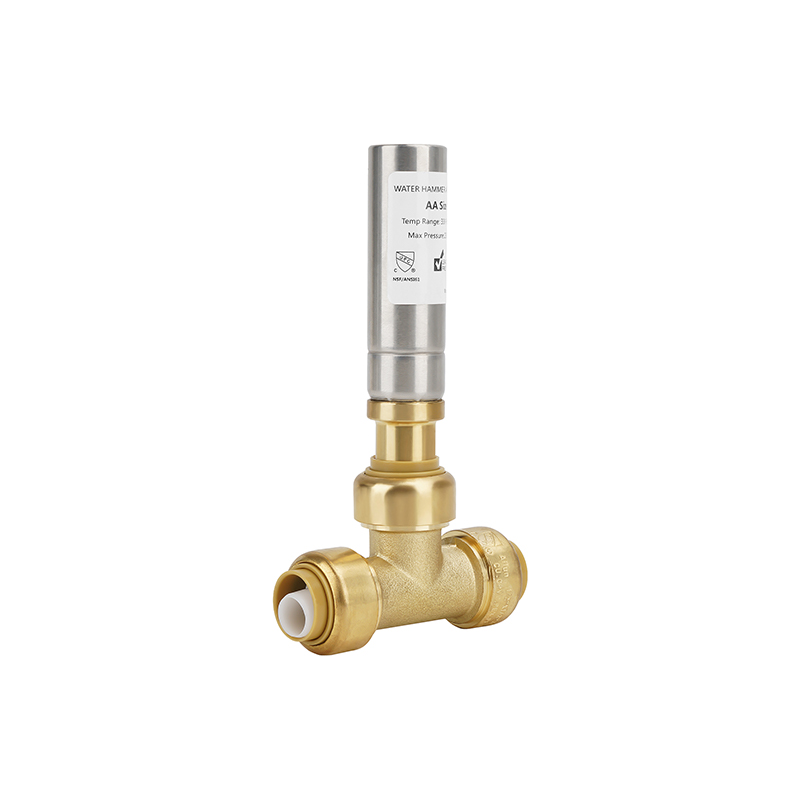
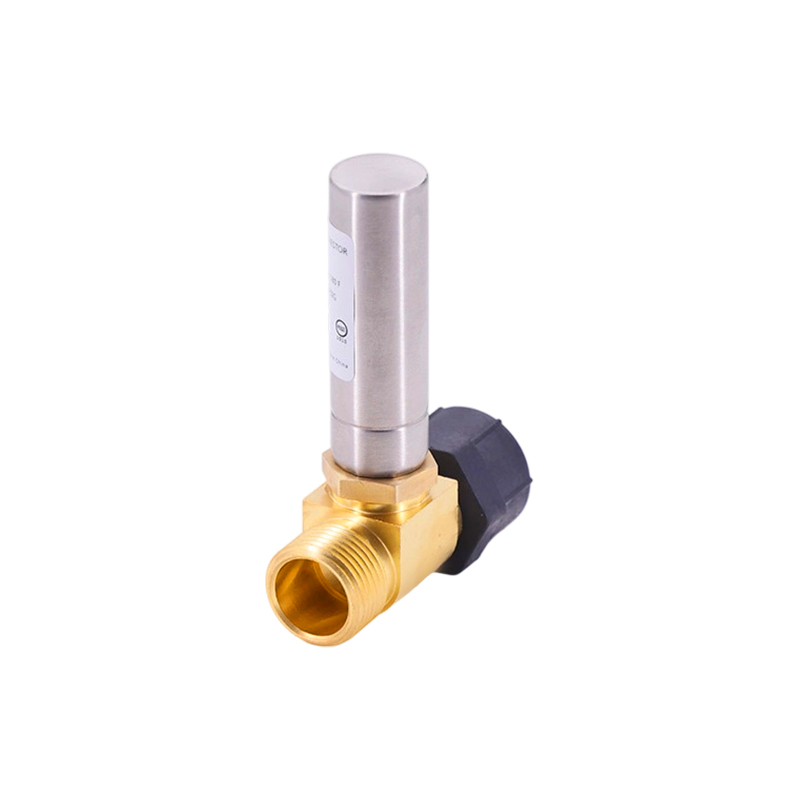
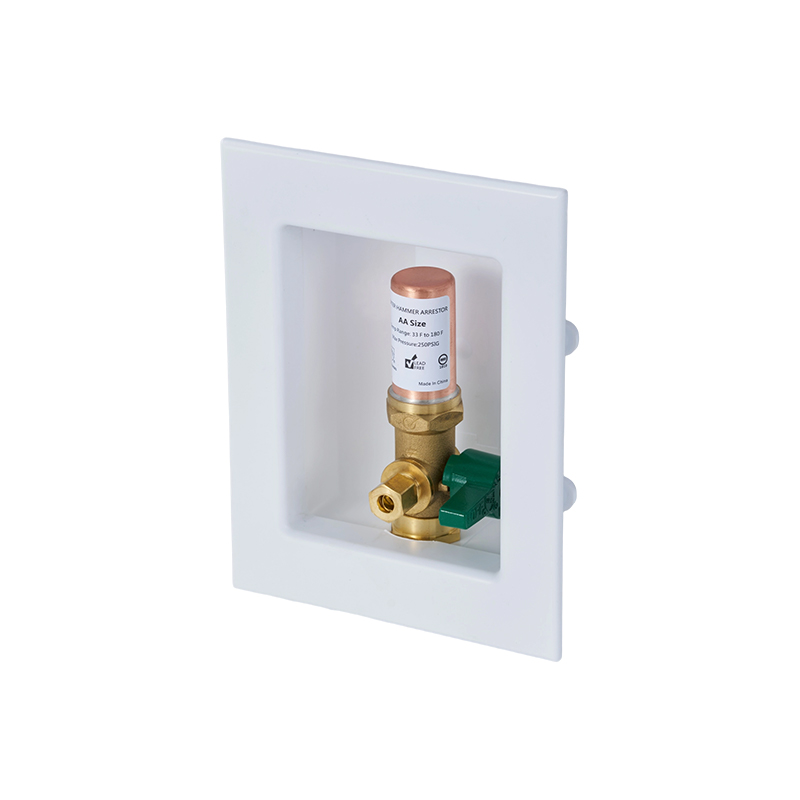
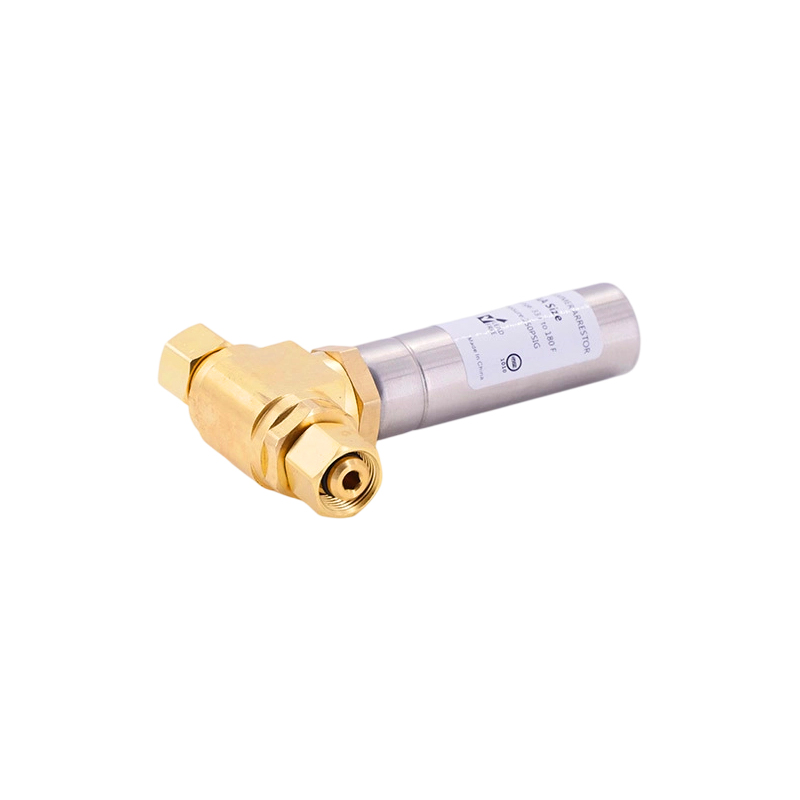
Fire-rated construction does not necessarily mean that the outlet box has to sacrifice hydraulic protection. Some product configurations combine the fire-rated box with brass supply valves and integrated water hammer arrestors.
Such configurations can carry ASSE 1010-listed arrestors while maintaining compatibility with PEX, copper, or CPVC supply connections. This creates a multifunctional assembly that combines wall penetration management, appliance shutoff, and pressure-shock control within the same installation zone.
For laundry rooms containing modern washing machines with rapid valve operation, this combination can be particularly relevant because the water hammer component is positioned close to the appliance connection.
Installation Restrictions Are Part of the Product
Another characteristic separating a fire rated washing machine outlet box from a standard outlet box is the importance of installation details. Published fire-rated specifications can restrict back-to-back placement, define the number of boxes permitted within a stud cavity, and establish minimum distances from studs.
- Bracket position: Mounting hardware may have designated installation positions within the tested assembly.
- Cavity arrangement: Boxes installed on opposite sides of a wall may have specific spacing or cavity restrictions.
- Stud clearance: The required distance between the box and framing can form part of the fire-test configuration.
- Wall finish: Gypsum layers and perimeter treatment can be part of the listed assembly rather than optional construction details.
Fire Rating Changes the Product Evaluation Process
Choosing a washing machine outlet box for a rated wall requires more than checking valve size or pipe compatibility. The relevant fire rating, tested wall construction, penetration details, mounting method, and pipe configuration all need to match the project conditions.
A fire rated washing machine outlet box can therefore be viewed as a tested part of a larger wall system rather than simply a stronger version of a conventional plumbing box. Its value comes from the relationship between box construction, fire-resistant materials, plumbing connections, mounting hardware, and the rated wall assembly.
That distinction becomes particularly important in commercial and multi-family projects, where maintaining the specified fire-resistance performance of a wall can be just as important as providing accessible washing machine connections.