

 English
 Español
 Français

Commercial plumbing systems rarely operate around a single fixture. Multiple toilets, lavatories, washing machines, dishwashers, process equipment, and other water-consuming devices may share the same branch or supply line. Rapid valve closure across these fixtures can create pressure shocks that are considerably more challenging than those found at a single residential appliance.
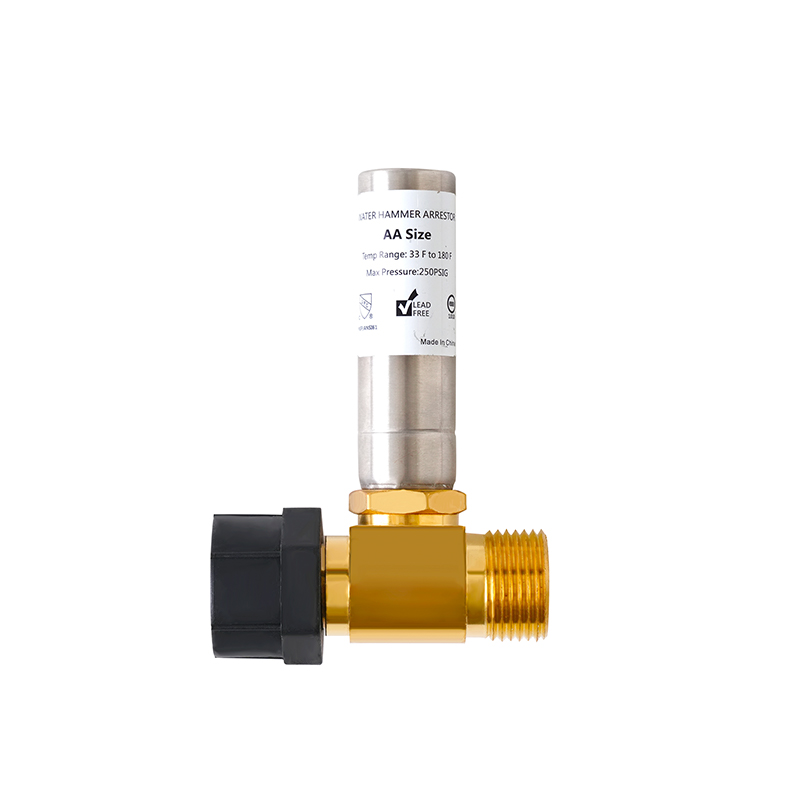
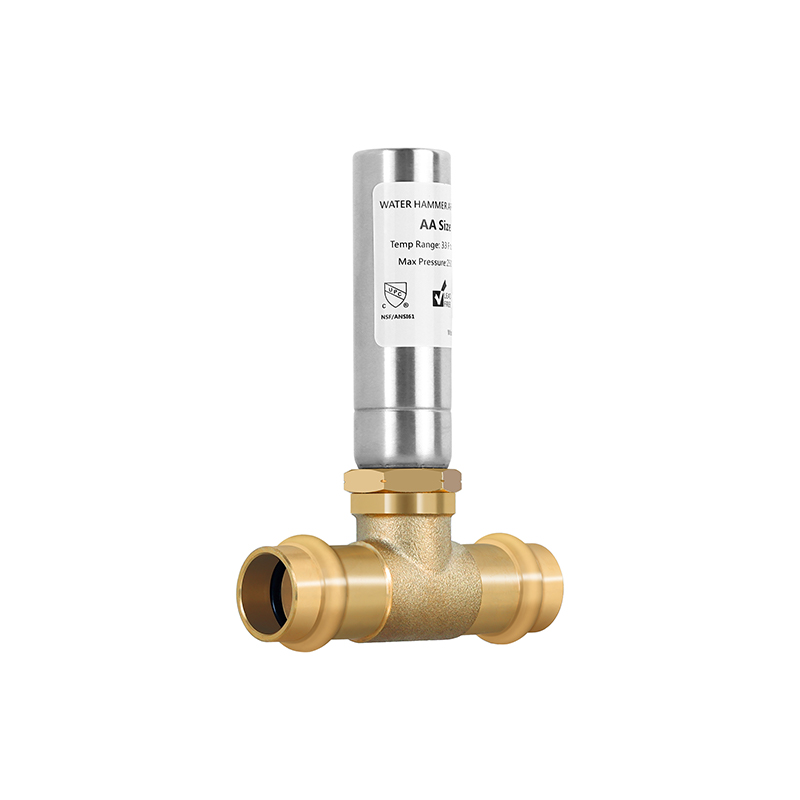
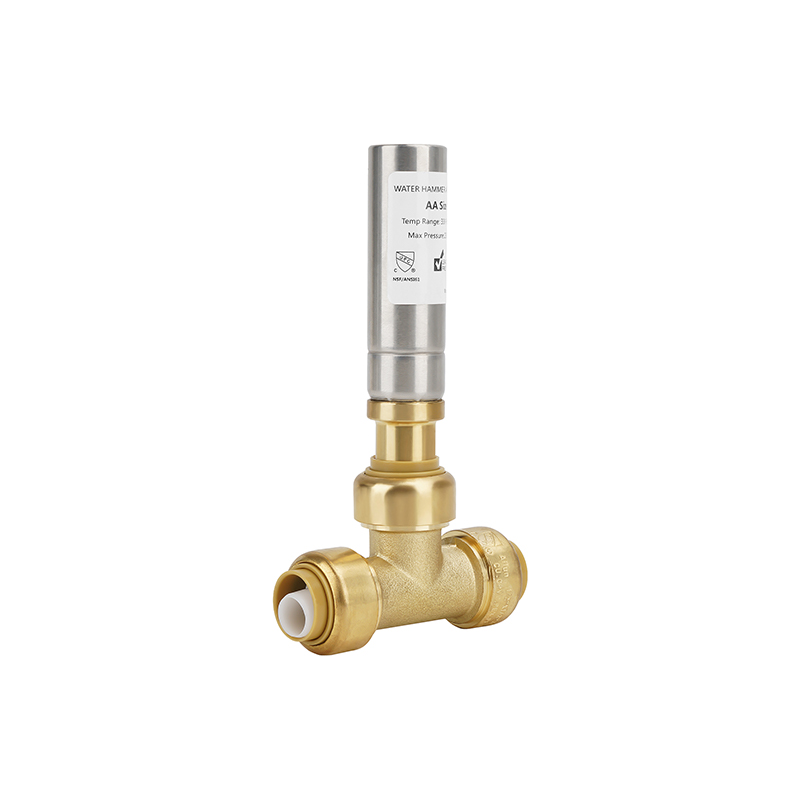
That environment gives the commercial water hammer arrestor a broader role. The device needs to match the hydraulic demand of the branch while operating within its rated pressure, temperature, connection, and fixture-unit range. ASSE 1010 describes water hammer arresters as devices intended to prevent detrimental surge pressures within water distribution systems and provide continuous protection against such pressure events.
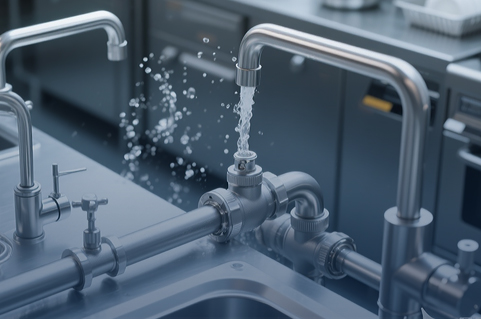
Flush Valves Create Repeated Pressure Events
Public restrooms can present demanding conditions because several flush valves may operate throughout the day. Each rapid shutoff can interrupt moving water and generate a pressure wave that travels through the connected piping.
- Frequent cycling: Repeated valve operation exposes the plumbing system to recurring hydraulic shocks.
- Multiple fixtures: Several flush valves may share a branch, increasing the fixture-unit demand.
- Rapid closure: Quick shutoff creates a sharper change in water velocity.
- Long branches: Extended piping can change the pressure-wave behavior and arrester sizing requirements.
Commercial sizing systems commonly use fixture units to determine arrester capacity. PDI categories range from A, covering 1–11 fixture units, through F, covering 155–330 fixture units.
Commercial Kitchens Add Another Challenge
Commercial kitchens combine several types of quick-closing water equipment. Dishwashers, pre-rinse faucets, spray equipment, and other fixtures can create different hydraulic events across the same plumbing network.
Equipment such as commercial dishwashers may use electronically controlled valves that open and close rapidly. Product specifications for commercial arresters commonly identify dishwashers, washing machines, and quick-closing faucets as suitable applications. Some models operate at working pressures around 150 psi and use permanently sealed gas cushions with factory air charges.
Why Fixture Diversity Matters
- Different valve speeds: Electronic valves and manual valves can produce different pressure responses.
- Different flow rates: Spray fixtures and appliance connections may have different water demands.
- Shared branches: Several fixtures can contribute to the total fixture-unit load.
- Frequent operation: Busy food-service areas can generate repeated pressure events during operating hours.
Long Branch Lines Can Change the Sizing Picture
Distance between the water source and quick-closing equipment can become a significant factor in commercial installations. A long branch contains a larger volume of moving water, and the pressure response can become more complex as pipe length increases.
Commercial arrester instructions can use pipe length, nominal pipe diameter, line pressure, and water velocity to determine the required configuration. One published example uses a 2-inch pipe, a 98-foot run, 60 PSIG line pressure, and 10 FPS velocity, resulting in a requirement for multiple PDI F units. Increasing the pressure to 70 PSIG changes the specified arrester combination again.
This illustrates why a commercial water hammer arrestor cannot be sized simply by looking at the pipe connection size.
Large Fixture Loads Push Capacity Higher
Commercial buildings can contain substantially higher fixture-unit totals than individual residential branches. PDI sizing categories provide a structured way to match arrester capacity with the downstream water demand.
- Size A: 1–11 fixture units, typically using a 1/2-inch connection.
- Size B: 12–32 fixture units, typically using a 3/4-inch connection.
- Size C: 33–60 fixture units, typically using a 1-inch connection.
- Size D: 61–113 fixture units, typically using a 1-1/4-inch connection.
- Size E: 114–154 fixture units, typically using a 1-1/2-inch connection.
- Size F: 155–330 fixture units, typically using a 2-inch connection.
These categories demonstrate the relationship between branch demand and arrester capacity. They also explain why commercial plumbing projects can require multiple units rather than simply using a larger connection at a convenient location.
Washing Machines Can Also Be Part of the Problem
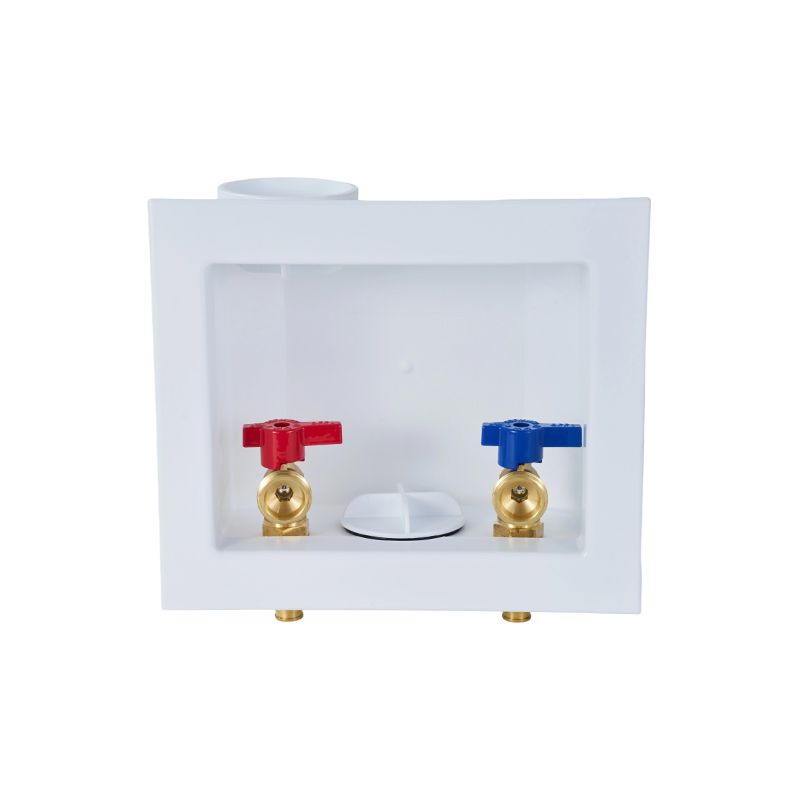
Laundry facilities create a different commercial challenge. Multiple washing machines may operate within the same area, with each appliance using rapid-closing water valves. Shared plumbing can therefore experience repeated pressure disturbances throughout the day.
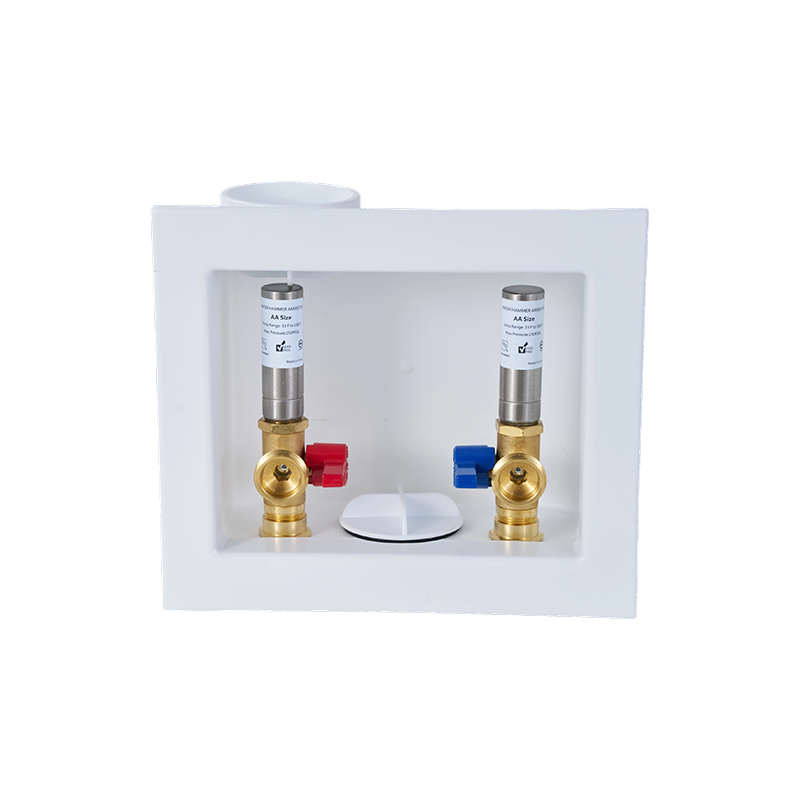
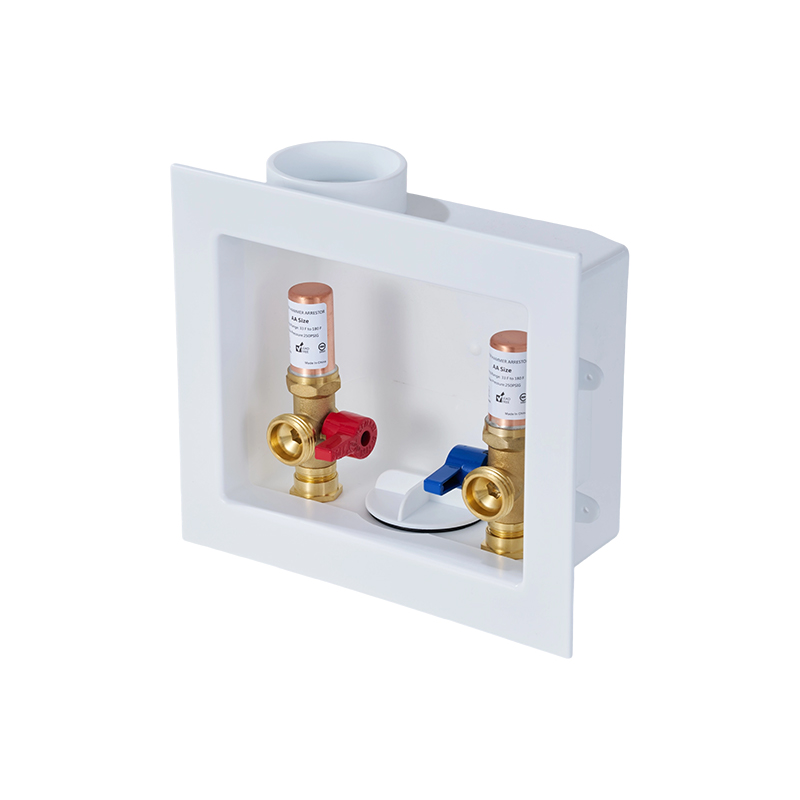
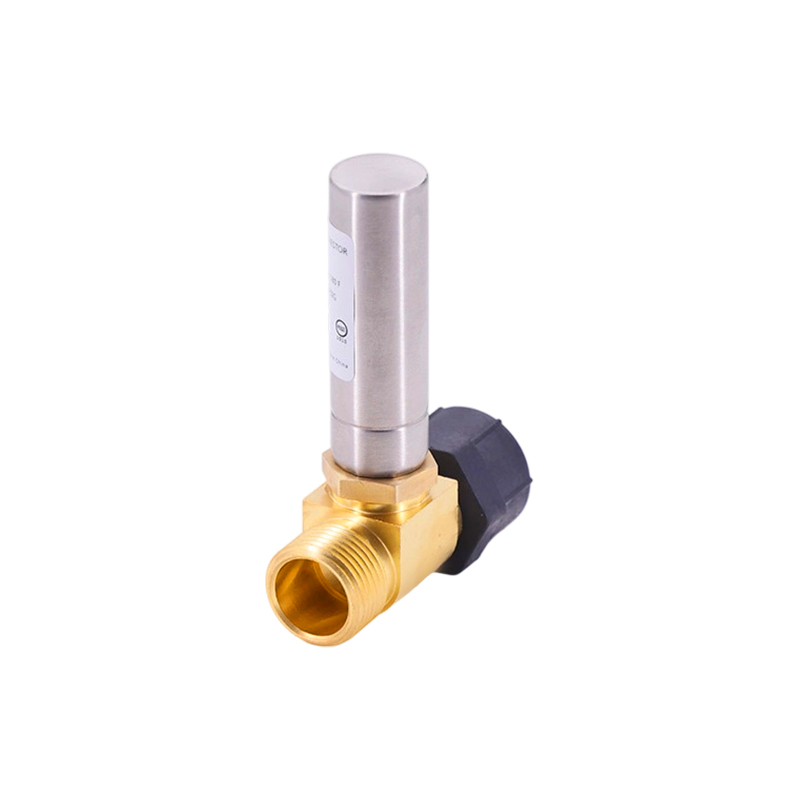
Commercial arrester products may specifically list washing machines among their intended applications. Some designs can be installed vertically, horizontally, or at other angles through a standard pipe tee, giving contractors flexibility around crowded mechanical spaces.
Placement still matters. An arrester positioned close to the source of the pressure disturbance can address the surge before it travels extensively through the branch. Long multi-fixture branches may require a different placement strategy and, depending on the sizing method, multiple arresters.
Process Equipment Raises the Stakes
Industrial and institutional plumbing can contain quick-closing valves connected to process tanks or specialized equipment. Such applications may involve larger pipe diameters, longer runs, higher flow velocities, and greater operating pressures than ordinary fixture branches.
Published commercial sizing examples show that combinations of pipe diameter, pipe length, pressure, and velocity can significantly affect the required arrester arrangement. A 2-inch process line, for example, can require several arrester units under specific hydraulic conditions.
What Should Buyers Check?
Commercial applications make product specifications particularly important. A suitable commercial water hammer arrestor should be evaluated against the actual hydraulic environment rather than its nominal connection diameter alone.
- Fixture-unit capacity for the protected branch
- Working pressure and expected pressure fluctuations
- Pipe diameter and branch length
- Flow velocity near quick-closing valves
- Valve type and closure characteristics
- Connection method and available installation orientation
- Applicable performance standard, such as ASSE 1010
Commercial Plumbing Tests the Whole System
The toughest environment for a commercial water hammer arrestor is not defined by a single fixture. High-use restrooms, commercial kitchens, laundry facilities, long branch lines, and process equipment can all create demanding hydraulic conditions for different reasons.
That makes arrester capacity, placement, and product construction closely connected to the plumbing layout. Fixture units, pipe length, pressure, velocity, and valve behavior provide a more useful picture of the application than connection size alone.
Commercial water hammer control therefore works best as a system-level consideration. Matching the arrester to the actual branch conditions gives contractors and engineers a clearer basis for handling repeated pressure shocks across demanding plumbing environments.