

 English
 Español
 Français

Wall cavities in modern plumbing layouts often leave very little room for vibration control components. Pipe shock, commonly called water hammer, tends to travel rapidly through rigid lines and becomes amplified at elbows, valves, or poorly supported sections. Straight-format arrestors are often discussed as a space-efficient response to this challenge.
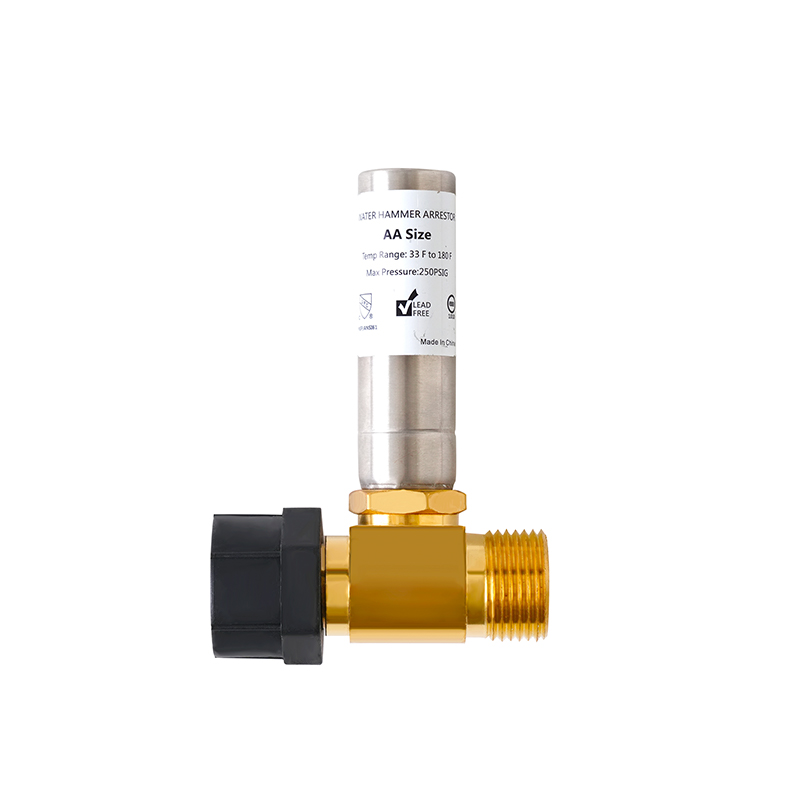
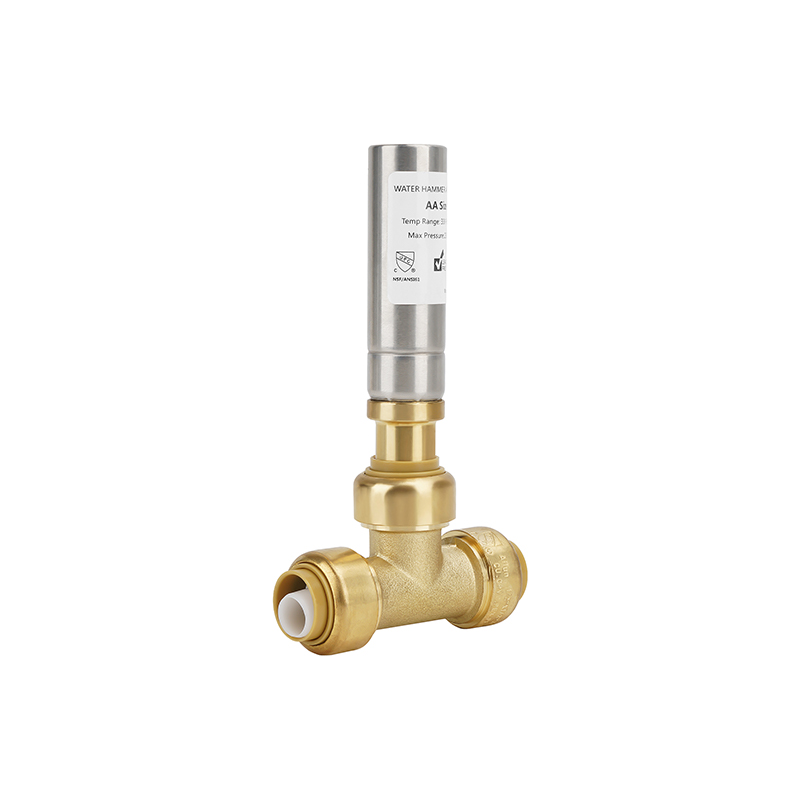
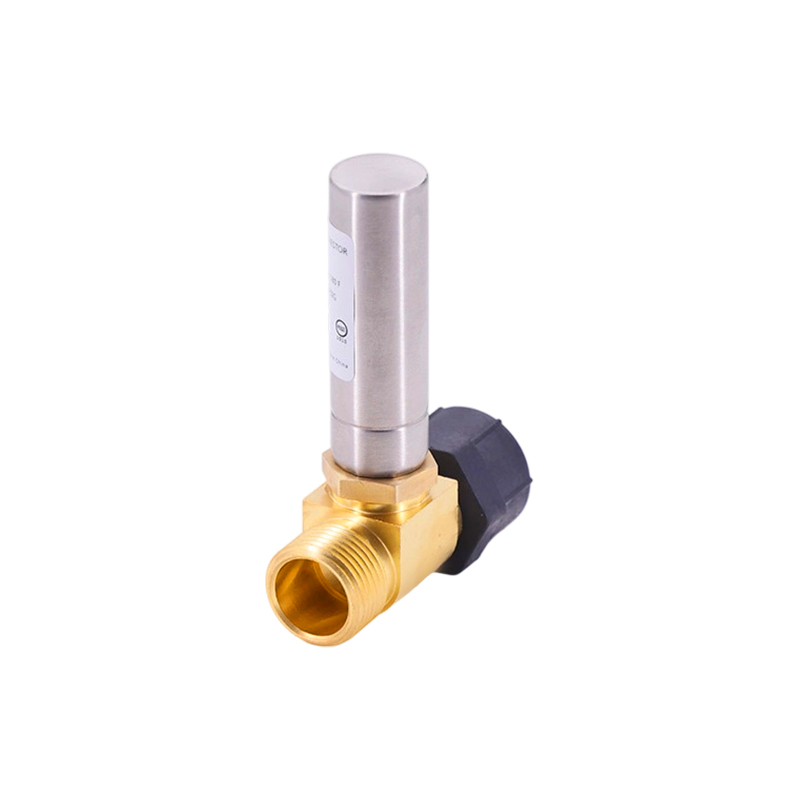
The Straight Style Stainless Steel Water Hammer Arrestor is commonly used in confined installations where offset mounting is not practical. Its inline geometry aligns directly with the water path, reducing directional turbulence inside wall chases while maintaining a compact footprint.
Structural Behavior in Narrow Wall Cavities
Pipe movement inside tight framing spaces is rarely visible but still highly energetic. Sudden valve closure creates a pressure wave that rebounds through the piping network. A straight-body arrestor introduces a controlled absorption chamber without requiring lateral clearance.
- Inline flow alignment helps reduce additional directional stress points inside stud bays
- Reduced fitting complexity limits vibration amplification at junction transitions
- Compact stainless steel shell supports high-pressure residential and light commercial systems
Pressure Shock Absorption Mechanism
Water hammer arrestors typically rely on a sealed gas or spring-loaded chamber. Stainless steel models often use a piston or bellows assembly that compresses under sudden pressure spikes. This controlled compression absorbs kinetic energy before it reflects into the pipeline.
Industry data from stainless bellows designs shows working pressure ranges commonly around 150–250 psi, with temperature tolerance spanning domestic hot water conditions. These parameters allow stable operation in concealed wall environments where heat dissipation is limited.
Installation Constraints in Tight Wall Spaces
Confined installation zones often dictate component selection more than hydraulic performance. Straight configuration units eliminate the need for directional offset fittings, which can introduce additional vibration nodes.
- Direct MIP or threaded connection simplifies integration into existing supply lines
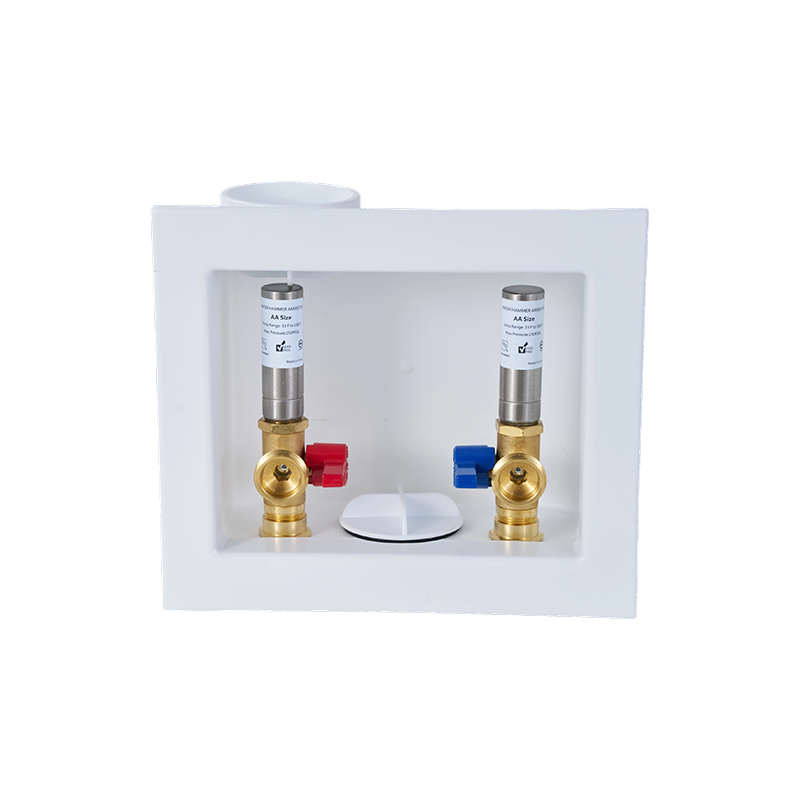
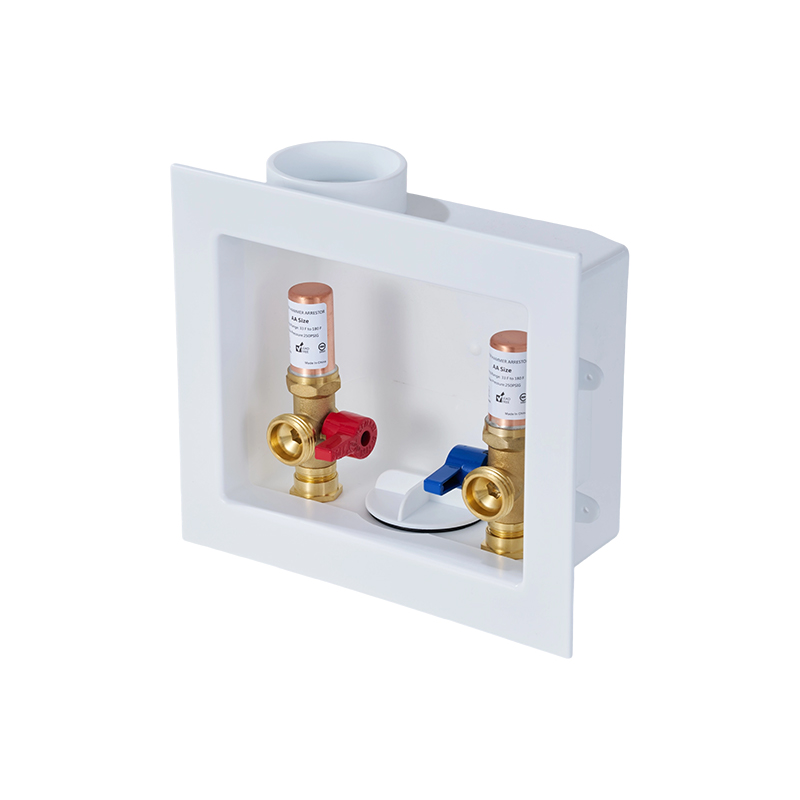
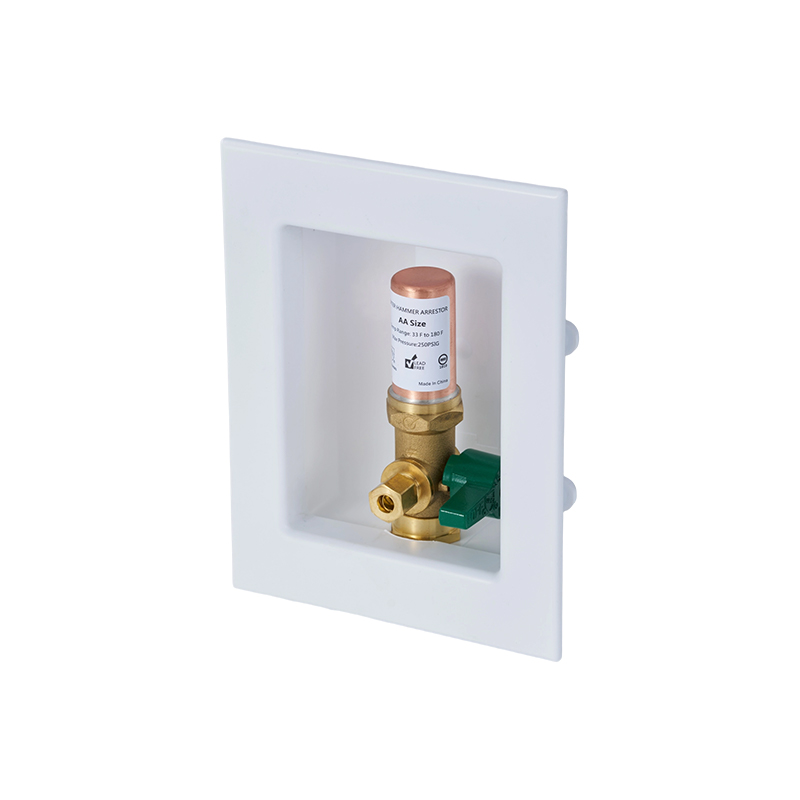
- Minimal projection depth allows placement behind washing machine boxes or service panels
- Multi-orientation tolerance supports horizontal or vertical mounting inside framing cavities
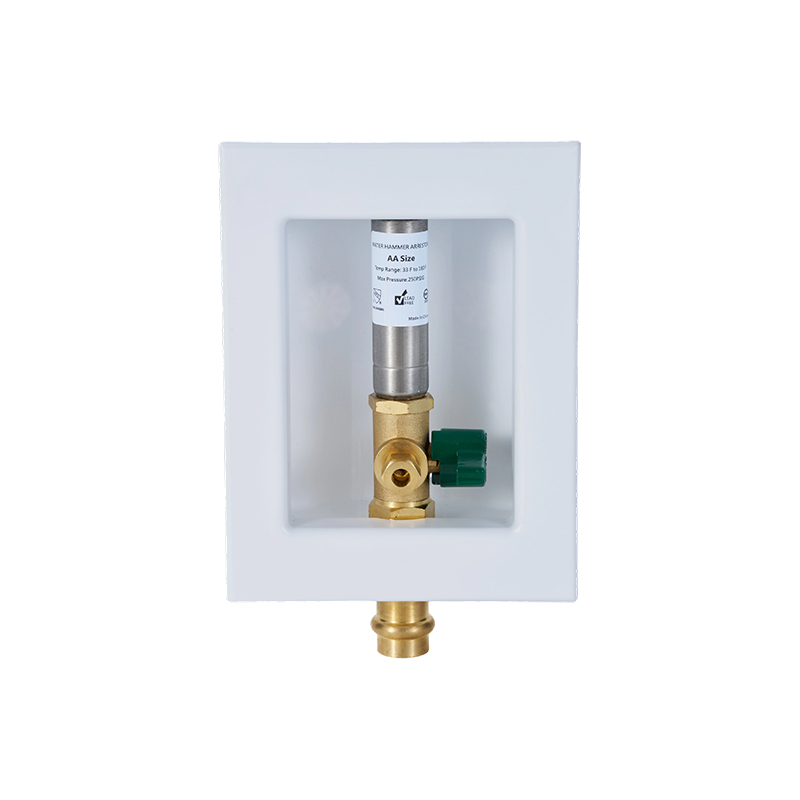
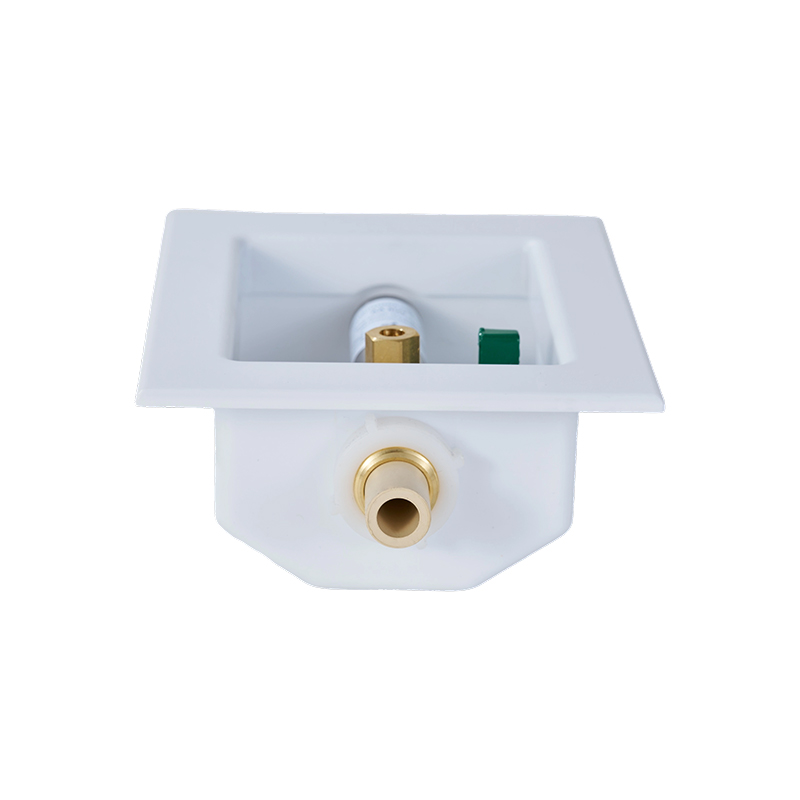
Some push-to-connect systems used in outlet box assemblies also demonstrate similar installation advantages in tight areas, though stainless arrestors remain preferred in higher-pressure shock mitigation scenarios.
Interaction Between Pipe Rigidity and Shock Wave Control
Rigid piping materials such as copper or hard polymer transmit shock waves more efficiently than flexible systems. Stainless steel arrestors are often selected because of their structural stability under repeated impulse cycles.
Research on fluid transients shows that pressure waves propagate as high-speed oscillations that reflect at discontinuities such as tees or closed valves. A straight arrestor positioned near the source reduces wave intensity before it spreads into the wall cavity network.
Material Performance Factors
Stainless steel construction contributes both corrosion resistance and mechanical durability. Internal components are typically engineered for cyclic fatigue resistance under repetitive hammering conditions.
- 304 or similar stainless alloys resist long-term moisture exposure inside wall voids
- Sealed piston or bellows system maintains consistent damping response over time
- Lead-free compliance designs support potable water applications
Behavior Under Repeated Valve Cycling
Appliances such as washing machines and solenoid-controlled fixtures generate rapid closure cycles. Each cycle introduces a pressure spike that travels through the pipe network. Straight arrestors help dissipate these repetitive surges without requiring external access panels.
Field observations indicate that properly sized arrestors reduce audible pipe knock significantly, especially in boxed-in installations where vibration echoes amplify sound transmission.
Design Tradeoffs in Compact Plumbing Systems
Space efficiency often competes with energy absorption capacity. Smaller arrestors may respond faster but offer reduced damping volume, while larger units provide stronger mitigation but require more installation space.
- Compact units suit tight wall-mounted washing machine boxes
- Larger chamber designs improve energy dissipation in long pipe runs
- Straight format geometry balances accessibility and performance in retrofit projects
Hydraulic Stability in Concealed Installations
Hidden pipe runs inside walls amplify acoustic effects due to reflection and resonance. Straight stainless arrestors reduce additional turbulence zones that may otherwise worsen vibration patterns.
Hydraulic modeling studies show that smoother flow transitions reduce localized pressure spikes, especially near quick-closing valves. Arrestor placement close to the source remains critical for effectiveness in all configurations.
Straight-format stainless arrestors provide a practical solution for reducing hidden pipe shock where installation space is constrained. Their inline geometry, combined with stainless steel structural strength and sealed damping chambers, allows stable pressure absorption without requiring complex fitting arrangements.
Compact wall environments benefit from this configuration because it minimizes additional stress points while maintaining consistent hydraulic response across repeated pressure cycles. The result is a quieter, more stable plumbing system even under frequent appliance operation.